Nanostructure Metamaterial Optimization
Nanostructure Metamaterial Optimization
Project Overview
The goal of this project was to design a nanostructure metamaterial that is as strong and tough as possible while using very little material.
Objectives
- Maximize strength
- Maximize toughness
Design Constraints
- Infill must stay below 20%
Process
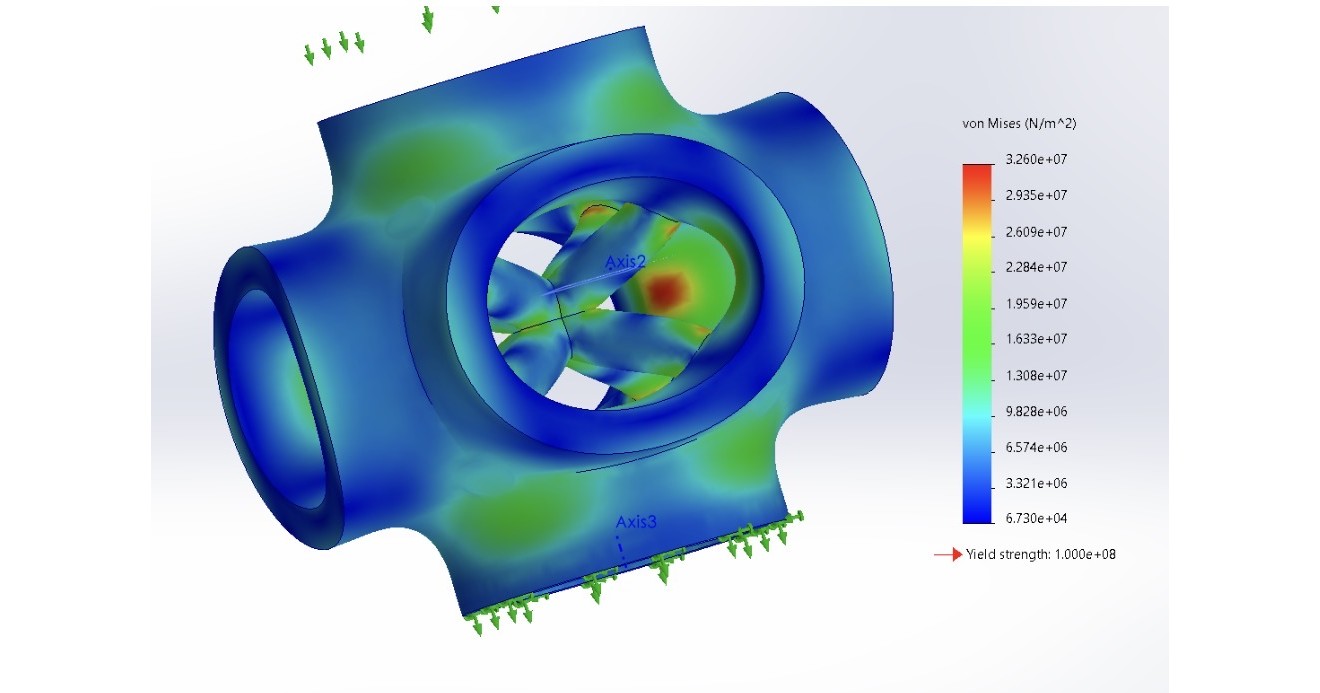
- Design iteration: I modeled several candidate unit cells in CAD and ran FEA on each one to compare their performance before settling on a final design.
- Tessellation: I patterned the final unit cell into a 5×5 structure.
- Fabrication: I manufactured the structure at MIT.nano using two-photon lithography.
- Testing: I measured its mechanical performance on a nano Instron machine.
Design Iteration
I iterated on the unit cell in CAD, using FEA to check how each design carried load before committing to a final model.
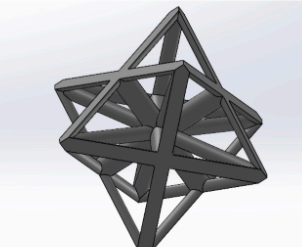
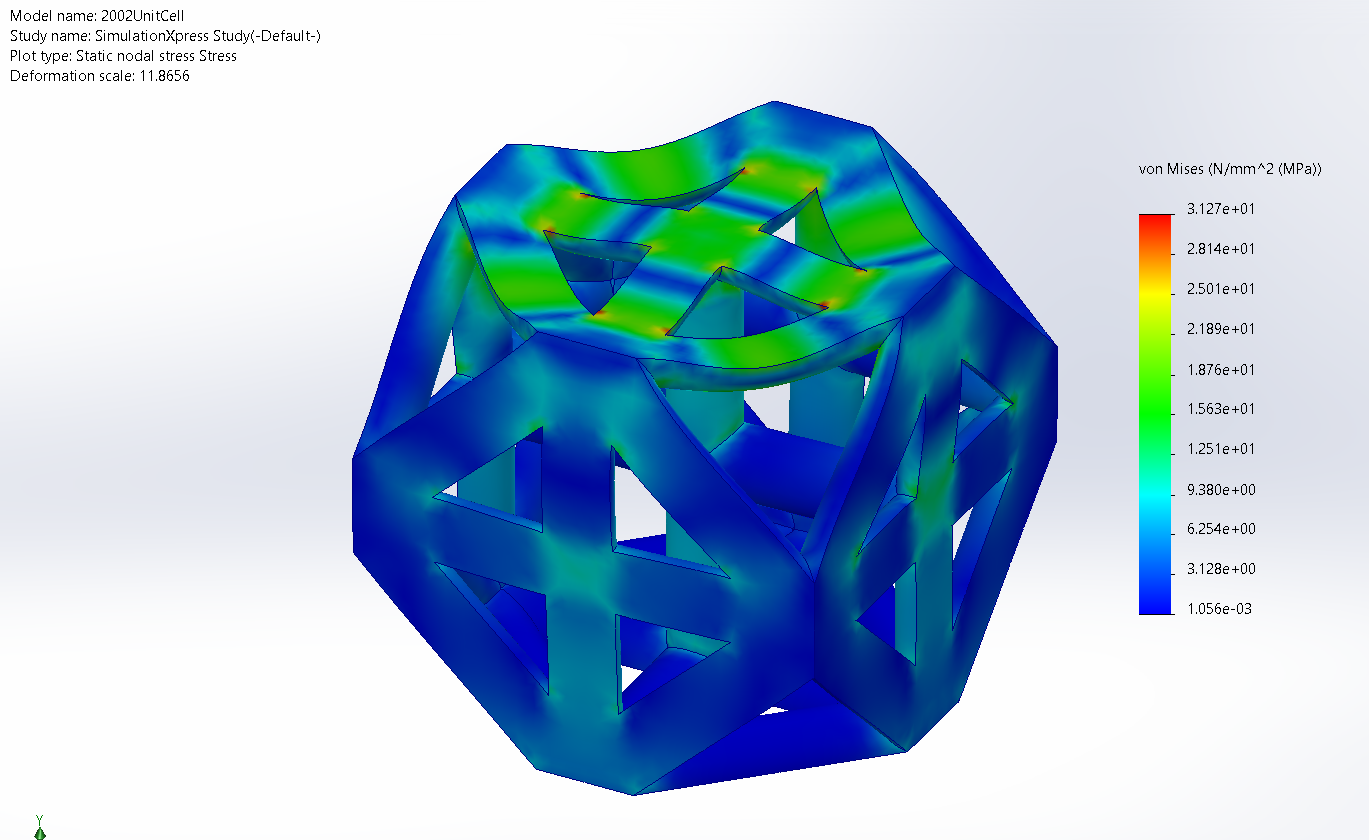
Left: an early unit cell design. Right: FEA of a candidate unit cell, showing von Mises stress.
Fabrication and Testing
After tessellating the final unit cell into a 5×5 structure and printing it with two-photon lithography, I compressed it in a nano Instron.
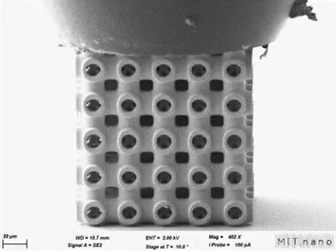
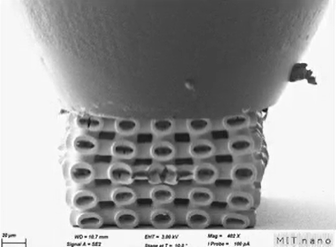
SEM images of my 5×5 structure in the nano Instron, before (left) and after (right) compression.
Results
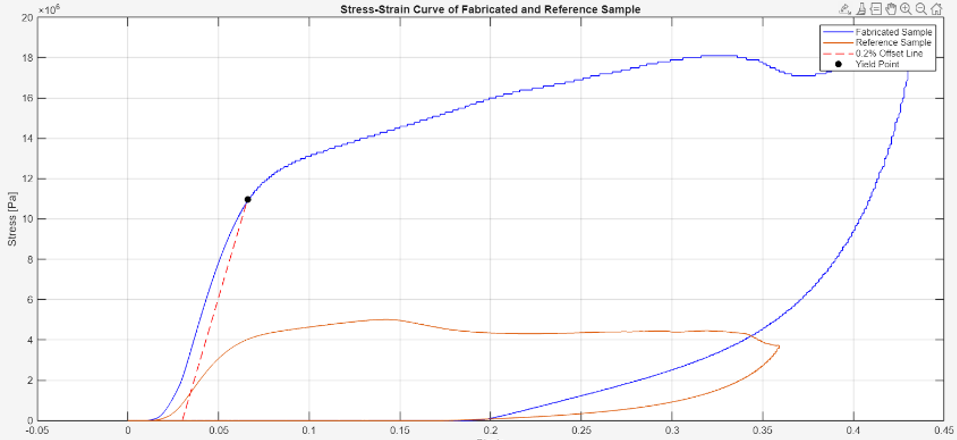 Stress-strain curve of my fabricated sample (blue) compared with the class reference sample (orange) we were tasked to outperform.
This post is licensed under CC BY 4.0 by the author.